
Beyond the Strike: How Nurse Consultants Could Redefine Nigerian Healthcare
Introduction
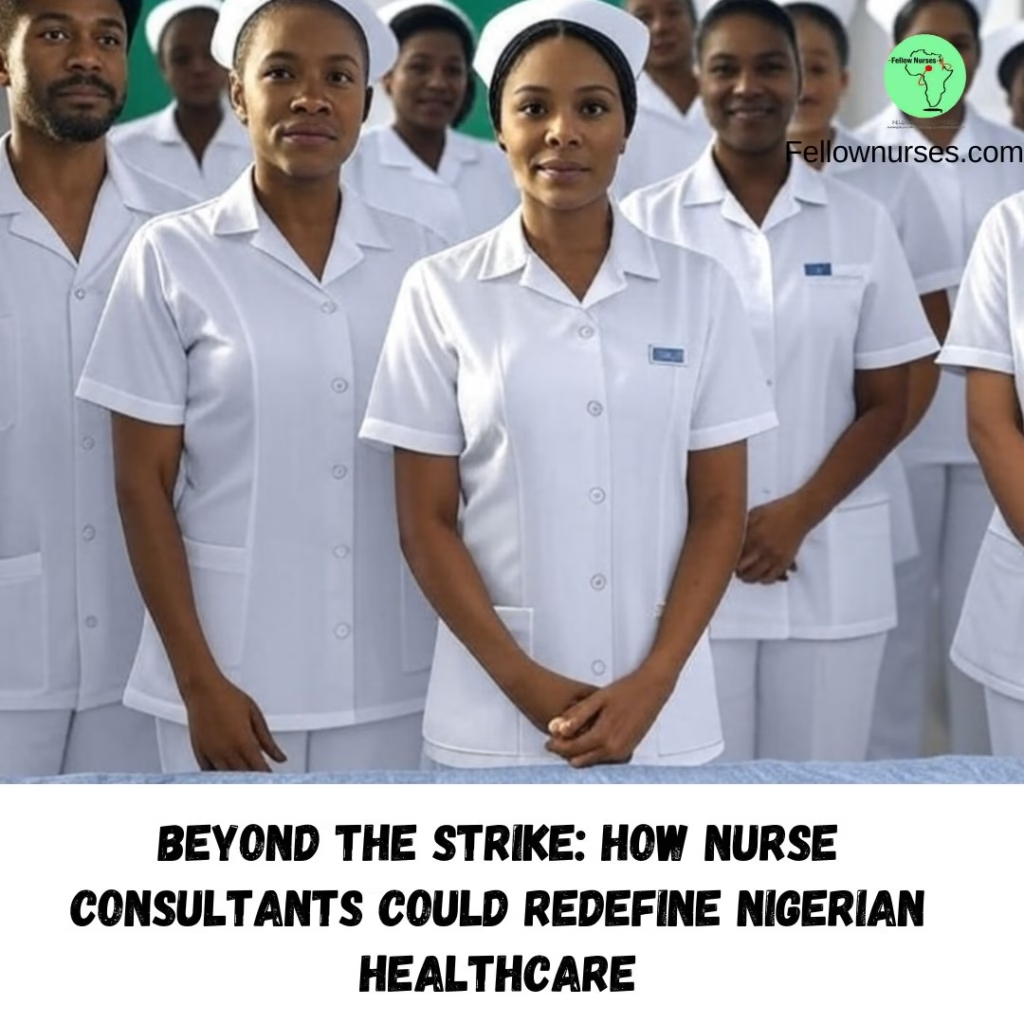
Since the last couple of days, the Nigerian online platforms has been a hotbed of intense discussions about the role of nurse consultants in Nigeria, fueled by the ongoing strike by the National Association of Nigeria Nurses and Midwives (NANNM). Launched on July 30, 2025, this strike has spotlighted demands for better pay, improved working conditions, and the establishment of a consultancy cadre for nurses. The call for nurse consultants, in particular, has ignited debates, with nurses arguing that such roles are vital for advancing their profession and enhancing healthcare outcomes. This article explores the strike’s context, defines the nurse consultant role, and examines how its adoption could redefine Nigerian healthcare, drawing on professional insights, and international models.
The Strike and Its Demands
On July 30, 2025, nurses in Nigeria’s federal health institutions began a seven-day warning strike after the government failed to meet their demands following a two-week ultimatum. The action has disrupted public hospital services, leaving patients stranded and underscoring nurses’ critical role. The demands of the nurses are:
| Demand Category | Specific Demands |
|---|---|
| Allowances | Upward review of shift, uniform, and core duty allowances |
| Salary Structure | Separate salary structure for nurses |
| Employment | Mass recruitment of nurses |
| Policy and Recognition | Nursing department in the Federal Ministry of Health, nurse consultants, and nurse practitioners |
| Internship and Training | Centralized internship posting, gazetted nursing scheme of service |
| Facilities and Equipment | Adequate health facilities and equipment |
The demand for a consultancy cadre, including nurse consultants, is central. A nurse who spoke to Fellow Nurses Africa News, emphasized this. “We are also asking for a consultancy cadre for nurses; there should be nurse consultants and nurse practitioners,” she said, highlighting the need for advanced roles. Various reports from online news outlets have it that the strike action which is now in its second day has disrupted healthcare across Nigeria, emphasizing the strike’s impact, described as a “total shutdown,” reflecting nurses’ resolve.
Who Are Nurse Consultants?
Nurse consultants are advanced practice nurses specializing in areas like pediatrics or oncology. In the UK, Advanced nurse practitioners operates at band 8A while nurse consultants operate at band 9 (doctoral capabilities), per the Royal College of Nursing, with roles spanning:
- Clinical Practice: Expert patient care and case management.
- Education: Training healthcare professionals.
- Research: Advancing nursing through evidence-based studies.
- Leadership: Shaping policy and strategy.
In Australia, Clinical Nurse Consultants (CNCs) guide care coordination, while in the US, nurse consultants span clinical and legal roles. In Nigeria, however, the nursing hierarchy—ranging from Registered Nurse to Director of Nursing Services—lacks a consultant-level position, a gap the strike aims to address.
Why Nurse Consultants Could Redefine Nigerian Healthcare
The push for nurse consultants addresses critical challenges in Nigeria’s healthcare system:
Career Progression: Without advanced roles, nurses lack pathways to specialize or lead healthcare, contributing to brain drain. Over 42,000 nurses have left Nigeria in the last years. Consultant roles could retain talent by offering growth opportunities.
Buy vitamins and supplementsImproved Patient Outcomes: Nurse consultants could implement evidence-based practices, enhancing care in under-resourced hospitals. Studies, like one on cancer care ([https://pmc.ncbi.nlm.nih.gov/articles/PMC6917967/]), show nurse consultants reduce hospital readmissions and improve service delivery.
Policy Influence: Nurses are often sidelined in policy-making. Consultant roles would elevate their voice, fostering inclusive healthcare policies.
Professional Recognition: Nurses are undervalued compared to doctors. Consultant roles would affirm their expertise, aligning Nigeria with global standards, as nurses are experts, not just caregivers.”
Reduced Brain Drain: Advanced roles could curb nurse migration by offering competitive career paths, addressing shortages of nurses.
Potential Impacts
If implemented, nurse consultants could transform Nigerian healthcare:
- Quality Care: Leading specialized care models, improving outcomes.
- Career Development: Reducing burnout through clear advancement paths.
- Policy Reform: Ensuring nurse-driven policies for patient-centered care.
- Workforce Retention: Keeping skilled nurses in Nigeria.
Challenges to Implementation
Despite the potential, hurdles remain:
- Regulatory Overhaul: The Nursing and Midwifery Council of Nigeria must revise frameworks to include consultant roles, requiring legislative changes.
- Training Needs: Advanced education, possibly doctoral-level, demands investment in nursing schools.
- Funding Constraints: Resource-limited budgets may hinder role creation, a concern raised in X debates about government priorities.
- Stakeholder Resistance: Other healthcare professionals may oppose nurses’ expanded roles.
Nurse consultants could align Nigerian healthcare with global standards, but it requires stakeholder collaboration and resource allocation. The strike’s disruption underscores the urgency of resolving these demands to maintain services.
Conclusion
The NANNM strike, ongoing as of August 1, 2025, is more than a protest over pay and conditions—it’s a call to redefine Nigerian healthcare. The demand for nurse consultants reflects nurses’ aspirations for recognition, leadership, and impact. By establishing these roles, Nigeria could retain talent, enhance patient care, and build a resilient healthcare system.